
By Robin WenReviewed
Tungsten Carbide: A Grade Is Two Numbers
Tungsten carbide is a powder, a compound and a cemented composite. A grade is cobalt against grain size, and one ISO code can carry different numbers.
On this page
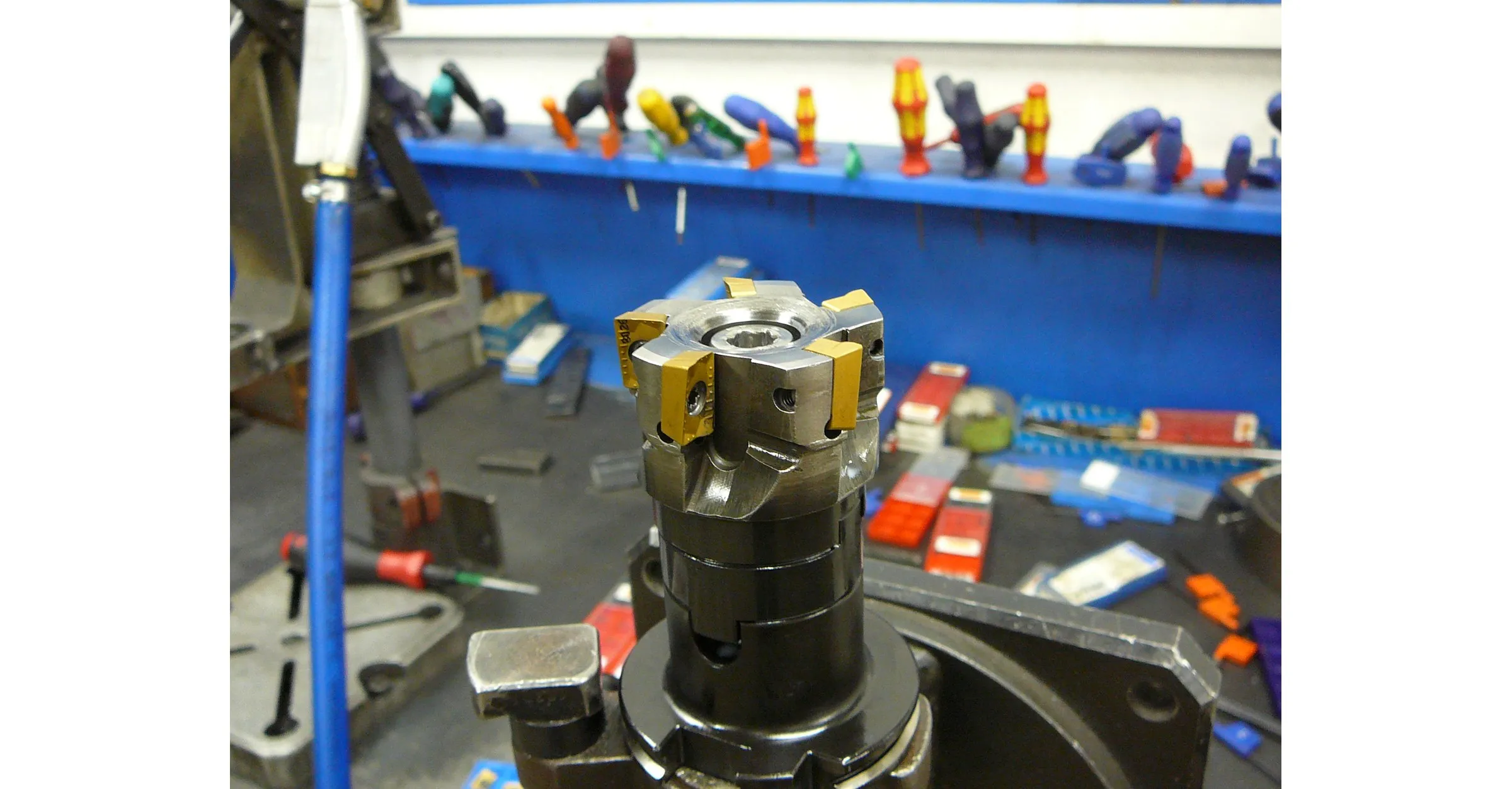
The word carbide covers three objects that are bought by three different people. There is tungsten carbide powder, the compound WC, which a powder buyer purchases by particle size and carbon content. There is the sintered part, which a tooling engineer buys by grade. And there is, in most workshop usage, cemented carbide: tungsten carbide grains held together by a cobalt binder, which is a composite rather than a compound and is not tungsten carbide at all.
That naming slippage is not pedantry when a grade is being compared, because the two documents involved describe different things. A powder certificate describes what will be pressed. A grade sheet describes what came out of the furnace. Neither one can be read as the other, and the number that decides the second is not a purity figure.
Tungsten carbide is a powder before it is a tool
The tungsten behind the powder arrives as a purified salt, ammonium paratungstate, which is reduced to metal and then carburised: carbon is reacted with tungsten powder, and the product is a fine grey powder rather than a metal. Four steps take that powder to a part (AZoM, what is tungsten carbide):
- Milling. The carbide powder is milled with cobalt and a binder that holds the powders together until pressing.
- Compaction. The mixture is pressed into a shape close to the finished part.
- Green machining. In that condition the compact is soft enough to cut, which is how holes and relief angles go in before the furnace.
- Sintering. The part is fired in a vacuum furnace at roughly 1,300 to 1,600 °C, where the binder enters a liquid phase while the grains stay solid, so the grains rearrange and the matrix fuses (cemented carbide).
After step four the material is hard enough that only diamond grinding will touch it. Two consequences follow for any specification. The sintered body is a composite, so its properties come from the mixture and the furnace rather than from the chemistry of the powder alone. And the last machining step available is the green one, so a feature that cannot be ground has to be shaped while the part is still soft.
A grade is cobalt against grain size
A cemented carbide grade is built from three decisions: which carbides go into the blend, how much binder holds them, and how coarse the grains are. Most grade sheets lead with the last two, because they pull the material in opposite directions.
| Grade | Grain, µm | Cobalt, % | TaC, % | Cr3C2, % | Hardness, HV30 | Rupture strength, N/mm² | Density, g/cm³ |
|---|---|---|---|---|---|---|---|
| DF6 (ISO K10) | 1.0 | 6.0 | 1.0 | 0.3 | 1,750 | 1,800 | 14.9 |
| DM6 (ISO K20) | 2.0 | 6.0 | 1.0 | none | 1,600 | 1,900 | 14.9 |
| DC7 (ISO K30) | 4.5 | 7.0 | none | none | 1,450 | 2,200 | 14.8 |
| D10 (ISO K40) | 3.5 | 10.0 | none | none | 1,350 | 2,400 | 14.5 |
| D20 | 3.5 | 20.0 | none | none | 1,000 | 2,700 | 13.5 |
Source: the published grade chart of one British manufacturer, read in November 2026 (Dymet Alloys, grade chart). The chart also carries nickel-bonded grades and heavier tantalum additions, both left out here because they change the comparison.
One pair isolates the binder. D10 and D20 share a 3.5 µm grain and differ only in cobalt, 10% against 20%. Doubling the binder drops hardness from 1,350 to 1,000 HV30 and lifts rupture strength from 2,400 to 2,700 N/mm². The binder is the tough phase and the carbide is the hard one, so binder buys shock resistance and gives up wear resistance.
The first two rows isolate the other axis less cleanly. DF6 and DM6 carry the same cobalt, 6%, and differ in grain size, 1.0 µm against 2.0 µm, which moves hardness from 1,750 to 1,600. They also differ in chromium carbide, 0.3% against none, so the pair carries a second variable as well as grain. The chart does not offer a pair that changes only the grain, so the 150 points cannot be assigned to grain size alone.
What the table does establish is that a grade is a position, not a rank. Hardness and rupture strength run opposite ways down it, and a buyer who asks for the harder grade is asking for the more brittle one.
Two charts give the same code different numbers
The ISO column carries application codes, and they are the part of a grade sheet most likely to be over-read. A code names a range of work that a grade is intended for. It is not a composition standard, and two manufacturers can publish the same code with different numbers behind it.
| Source | Code | Cobalt, % | Grain, µm | Hardness, HV30 | Transverse rupture strength |
|---|---|---|---|---|---|
| Dymet Alloys, current chart | K10 | 6.0 | 1.0 | 1,750 | 1,800 N/mm² |
| AZoM, 2009 article | K10 | 6 | 1.0 | 1,690 | 2,800 MPa |
Both are called K10, both claim 6% cobalt and 1.0 µm grain, and they differ by 60 points of hardness and by more than half in rupture strength. Seventeen years separate the two publications, and the compositions are not identical either: the British grade carries 1% tantalum carbide and 0.3% chromium carbide, while the 2009 grade is plain tungsten carbide and cobalt. Additions of that kind shift hardness and strength, and they shift them in the direction of both gaps here, so composition explains the difference at least as well as time does. Either way, K10 is a claim about application, not a specification two factories must meet identically.
Most cutting tools do not run bare carbide. A coating of titanium nitride, titanium carbide or aluminium titanium nitride is deposited by chemical or physical vapour deposition to increase hardness or lubricity and to keep the workpiece from galling on the edge (cemented carbide). The coating changes which substrate is wanted for a given cut, so a coated grade and an uncoated one can carry the same code and behave differently.
That matters at the point of purchase. A drawing that says “K10” fixes a range. A drawing that says “K10, 6% Co, 1.0 µm, HV30 minimum 1,700” fixes a grade.
Hardness needs its scale
The tables above use HV30: Vickers hardness under a 30 kg load, which is the scale both cited charts print. A figure quoted without its scale and load cannot be compared with them, because the number moves with the load applied.
The reference point matters more than the scale:
| Material | Hardness, HV30 |
|---|---|
| Cemented carbide, typical | about 1,600 |
| Mild steel | about 160 |
Both figures come from the same trade article (AZoM). The factor of ten between them is the commercial reason the material exists, and it is also why “harder” is not by itself a selling point: the grades at the top of the hardness column carry the least binder, and they are the ones that chip under an interrupted cut.
The powder is controlled even though the part is not
China’s tungsten controls of 4 February 2025 list tungsten carbide as an item of its own, qualified by a cross-reference: carbide other than that already controlled under another entry, 1C226 (Announcement No. 10 of 2025). The composition and property conditions live in that other entry, so the carbide line is shorter than the rule behind it. The solid tungsten item in the same announcement is written the other way round, as the tungsten metal page sets out.
The asymmetry is easier to see as a table, because the licence question changes with the object:
| Object | Named in the announcement | Where the condition sits |
|---|---|---|
| Tungsten carbide powder | yes, item 1C117.d.3 | in the entry it cross-references, 1C226, which the announcement does not reproduce |
| Solid tungsten | yes, item 1C117.c | printed in full: composition groups and machinable dimensions |
| A finished insert | no | it is an article, not a material on the list |
The powder is the input and the insert is the output, and the two buyers are asking different questions. The tariff schedule separates the raw forms as well, with tungsten carbides at 5.5% ad valorem and tungsten metal powders at 7%, neither of which is a finished tool (USGS, tungsten).
The upstream position is worth two numbers here. World mine output was 85,000 tonnes of tungsten content in 2025, and China produced 67,000 of those tonnes, which is where the supply of carbide powder starts (USGS).
Most of the demand sits on the finished end. The USGS estimates that 60% of American tungsten consumption goes into cemented carbide cutting and wear parts, used in construction, metalworking, mining and oil and gas drilling, with alloys, specialty steels, electrodes and chemicals taking the rest (USGS). The substitutes the USGS lists are molybdenum, niobium and titanium carbides, ceramics and cermets, and tool steels, and most of them reduce rather than replace the quantity used.
Six questions a grade sheet does not answer
A box of indexable carbide inserts usually arrives with one line of text on it: a grade code, and sometimes an ISO application class. None of the six questions below is settled by that code, and each changes what the sheet is worth.
- Is this a powder specification or a sintered one? Particle size, total and free carbon, and oxygen belong to the powder; cobalt, hardness, strength and density belong to the part.
- Cobalt by weight of the mix, or of the sintered body? The binder is weighed into the mill, and the sintered composition is what the customer measures.
- What is the mean grain size, and how was it measured? A chart grain size and a measured intercept length are not the same number.
- Which hardness scale and which load? HV30, HV10 and HRA give different figures for the same specimen.
- Transverse rupture strength on which test bar, at which binder content? Strength figures move with the specimen geometry and with cobalt.
- Is the grade the drawing names a composition or an application class? Only the first can be inspected on delivery.
A seventh question belongs to the material behind the grade: where the tungsten came from, and which customs line the powder crossed. The tungsten metal page follows that question back to concentrate and ammonium paratungstate. Across the materials section the pattern repeats: the number on the certificate describes one object, and the purchase is usually about another.
Methodology
Grade data are read from one manufacturer’s published chart and from a 2009 trade article, both cited where they appear; the two are compared only to show that an ISO code does not fix a composition, and the seventeen-year gap between them is stated in the text. The USGS Mineral Commodity Summaries 2026 chapter for tungsten supplies the consumption share, the tariff rates and the substitute list. The Chinese control status is quoted from the announcement of 4 February 2025, read in the original. Figures quoted here are specification and trade data rather than prices.
Sources
Dymet Alloys, tungsten carbide grade chart, read 8 November 2026. https://www.dymetalloys.co.uk/what-is-tungsten-carbide/grade-chart
AZoM, “What is Tungsten Carbide or Hard Metal?”, 2 August 2009. https://www.azom.com/article.aspx?ArticleID=4827
U.S. Geological Survey, Mineral Commodity Summaries 2026: Tungsten, February 2026. https://pubs.usgs.gov/periodicals/mcs2026/mcs2026-tungsten.pdf
商务部、海关总署公告 2025 年第 10 号(对钨、碲、铋、钼、铟相关物项实施出口管制),2025-02-04。 https://www.mofcom.gov.cn/zwgk/zcfb/art/2025/art_e623090907fc4e1092f0a4db72f57b95.html