
By Robin WenReviewed
Tungsten Uses: 60% of US Demand, One Product
In the US, 60% of tungsten demand goes to cemented carbide. The other 40% splits into alloys and specialty steels, electrodes and wires, and chemicals.
On this page
Tungsten uses in the United States concentrate on one product: about 60% of consumption goes to cemented carbide, and the other 40% splits into alloys and specialty steels, electrodes and wires, and chemicals.
What are the main tungsten uses?
The Survey’s sentence is worth reading in full, because the shape of the industry is in its punctuation (USGS, tungsten):
“An estimated 60% of the tungsten consumed in the United States was used in cemented carbide parts for cutting and wear-resistant applications, primarily in the construction, metalworking, mining, and oil- and gas-drilling industries. The remainder was used to make various alloys and specialty steels; electrodes, filaments, wires, and other components for electrical, electronic, heating, lighting, and welding applications; and chemicals for various applications.”
Read the scope first. The 60% is US consumption, not world consumption, and the remainder is a three-item list. The Survey does not rank the three and does not split the 40% between them. Every application of tungsten in that second sentence is a different purchase, from a different converter, under a different code, and the only statement about their relative size is the word “remainder”.
Where does the other 40% go?
Read the semicolons as items in a list.
- Alloys and specialty steels reach a steel mill as ferrotungsten, which has its own tariff line at 5.6% ad valorem.
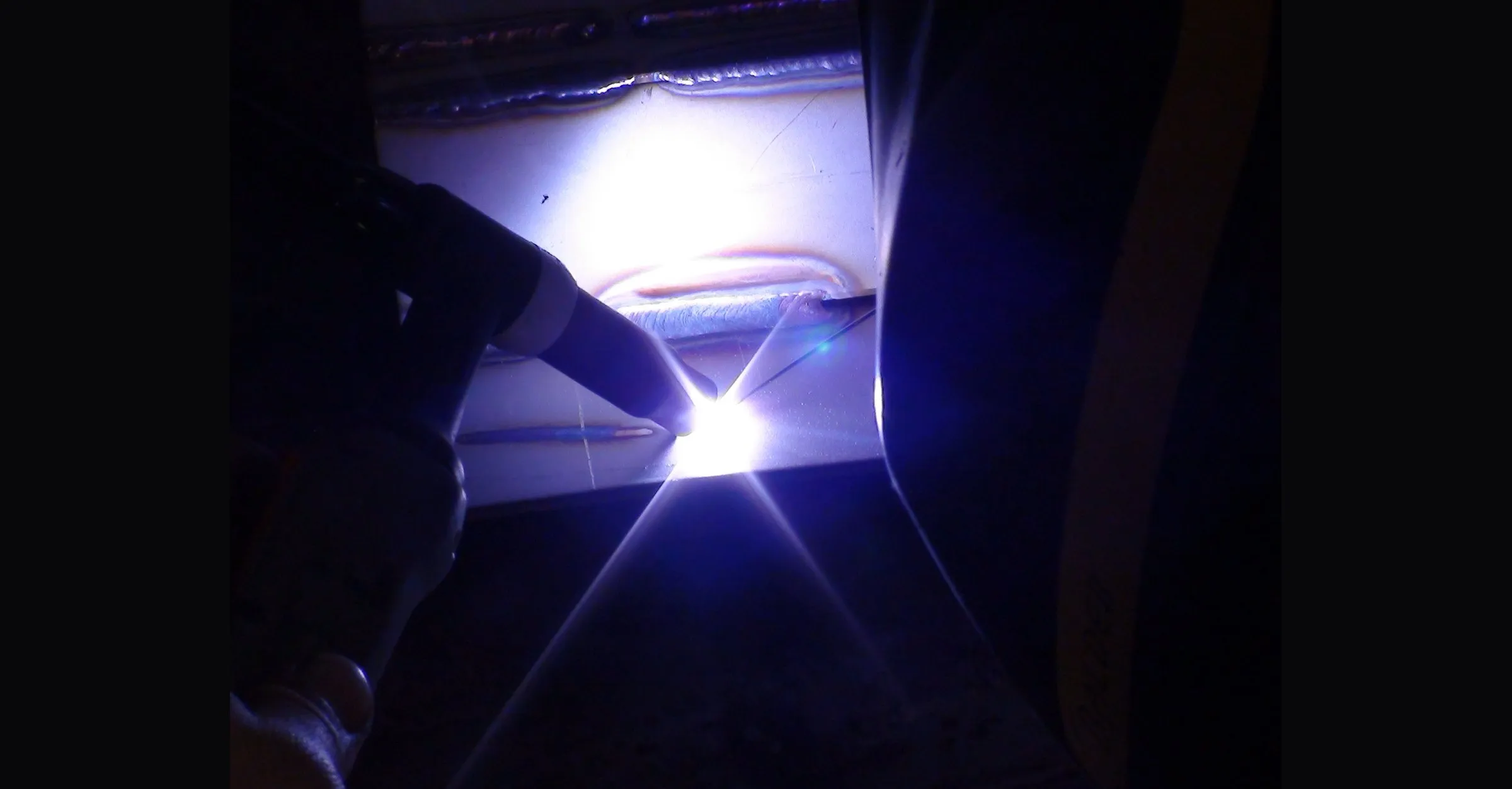
- Electrodes, filaments, wires and other components cover electrical, electronic, heating, lighting and welding duty. Welding is one of those duties, not a separate trade.
- Chemicals are the oxides and tungstates rather than any metallic form.
Each group buys a different product from a different converter, and none of the three is a market a buyer can compare with the other two. Tungsten uses in these lines share an element and not much else, and the Survey’s only statement about their relative size is the word remainder in the sentence quoted above.
Is cemented carbide a metal product?
No. The 60% does not begin with molten tungsten; it begins with tungsten carbide powder blended with cobalt and sintered. The seven companies that retain conversion capacity in the United States are described by what they produce, which is metal powder, carbide powder and chemicals, from concentrates, ammonium paratungstate, oxide or scrap.
The sintering step turns that blend into a solid, and it is why a carbide plant is built around furnaces rather than a smelter. The commercial geography follows: no commercial extraction has taken place in the United States since 2015, and the country depends on imports for more than half of apparent consumption, with China at 26% of imports over 2021 to 2024, Germany at 14%, and Bolivia and Vietnam at 8% each.
Grade, cobalt content, grain size and powder particle size belong to the carbide page, which treats them as the specification problem they are.
What do electrodes and chemicals have in common?
Very little, which is why they are the two smallest groups. The electrode and filament line covers electrical contacts, heating elements, welding electrodes and lamp filaments. The Survey’s substitute list shows where the lighting part of it is going, naming carbon nanotube filaments, induction technology and light-emitting diodes as replacements for tungsten electrodes and filaments, and that is a potential substitution rather than a record of displacement.
The chemical line looks least like a metal business. Tungsten trioxide and ammonium paratungstate are powders that move in drums and bags and feed both the carbide powder route and a range of smaller chemical uses. How that material changes hands is on the tungsten page, which covers the ten-kilogram unit and the conditions attached to a licence.
Where does density matter?
Two tungsten uses depend on density rather than on chemistry, and the Survey names them only in its substitute list rather than in its consumption split: radiation shielding and armour-piercing projectiles, both served where the requirement is weight in a small volume.
The Chinese control list defines those alloy families numerically, which is why a density figure matters commercially:
- 1C004, the tungsten heavy alloy entry. Tungsten-nickel-iron or tungsten-nickel-copper with density above 17.5 g/cm³, elastic limit above 800 MPa, tensile strength above 1270 MPa and elongation above 8%.
- 1C117.c, the solid tungsten entry. Solid tungsten that is not granules or powder, meeting one of three composition branches: tungsten or an alloy at 97% tungsten or more by weight, outside 1C226 and 1C241; copper-tungsten at 80% tungsten or more; or silver-tungsten at 80% tungsten or more and 2% silver or more.
The material must also be machinable into a cylinder at least 120 mm in diameter and 50 mm long, a tube with a bore of at least 65 mm, a wall of at least 25 mm and a length of at least 50 mm, or a block of at least 120 by 120 by 50 mm. Those entries carry no purpose test at all, which makes this the one part of the map where a clause and a customs heading part company. The note on entry 1C117.c sets out how the two texts differ.
Can tungsten be substituted?
Partly, and the Survey’s wording is the interesting part: Most of these options reduce rather than replace the amount of tungsten used.
The steel case is the clearest. Molybdenum steels are offered as the substitute for tungsten steels, and the Survey adds that most molybdenum steels still contain tungsten
. A substitution that keeps the element in the product is a cost reduction.
For carbide the alternatives are cemented carbides based on molybdenum carbide, niobium carbide or titanium carbide, plus ceramics, cermets and tool steels. The Survey notes that in some applications substitution would raise cost or lose performance, so a buyer comparing grades is comparing the cost of staying rather than the cost of leaving.
What does a tungsten buyer have to specify?
The tariff schedule is a practical map of what tungsten is in trade, because the forms are separated there even when the uses are not.
| Form | HTS | Duty |
|---|---|---|
| Ores | 2611.00.3000 | Free |
| Concentrates | 2611.00.6000 | 37.5 cents per kg on tungsten content |
| Tungsten oxides | 2825.90.3000 | 5.5% |
| Ammonium tungstates | 2841.80.0010 | 5.5% |
| Tungsten carbides | 2849.90.3000 | 5.5% |
| Ferrotungsten | 7202.80.0000 | 5.6% |
| Tungsten powders | 8101.10.0000 | 7% |
| Waste and scrap | 8101.97.0000 | 2.8% |
Four questions follow from it.
- Which form. Ore, concentrate, oxide, tungstate, carbide powder, metal powder, ferrotungsten and scrap sit on eight lines, and the powder carries the highest rate in the table.
- Which end use. A carbide plant, a steel mill and a chemical converter are three different customers for the same element.
- Which origin. With more than half of American consumption imported and China the largest single source, origin is a commercial fact rather than a formality.
- Which control line. Tungsten items went onto the Chinese export control list in February 2025 under Announcement No. 10 of 2025, which also covers tellurium, bismuth, molybdenum and indium. At the end of 2024 the United States raised tariffs to 50% on several tungsten products from China, and the Survey gives both that and the February controls as the reason prices rose sharply throughout 2025: Rotterdam rose from $266 to $551 per metric ton unit for 65% concentrate, and ammonium paratungstate from $331 to $675 (USGS).
Methodology
The consumption split, the three remainder groups, the converter count, the import reliance, the import sources, the substitute list, the production and reserve figures and the tariff schedule are from the USGS Mineral Commodity Summaries 2026 chapter on tungsten, which reports 2025 estimates and treats the United States separately from the world. The Survey ranks only the 60% against the remainder; it does not split the 40%, and this page does not either. Radiation shielding and armour-piercing projectiles appear only in the Survey’s substitute list, so the page gives them no place in the split. World mine production for 2025 is given as 85,000 tonnes of contained tungsten, with China at 67,000 tonnes. The price movement is the Survey’s own Rotterdam series for 65% concentrate and for ammonium paratungstate during 2025. The two control entries are quoted from Announcement No. 10 of 2025.
Sources
USGS, Mineral Commodity Summaries 2026: Tungsten. 2026. https://pubs.usgs.gov/periodicals/mcs2026/mcs2026-tungsten.pdf
Ministry of Commerce and General Administration of Customs, Announcement No. 10 of 2025: export controls on items related to tungsten, tellurium, bismuth, molybdenum and indium. 4 February 2025. https://www.mofcom.gov.cn/zwgk/zcfb/art/2025/art_e623090907fc4e1092f0a4db72f57b95.html